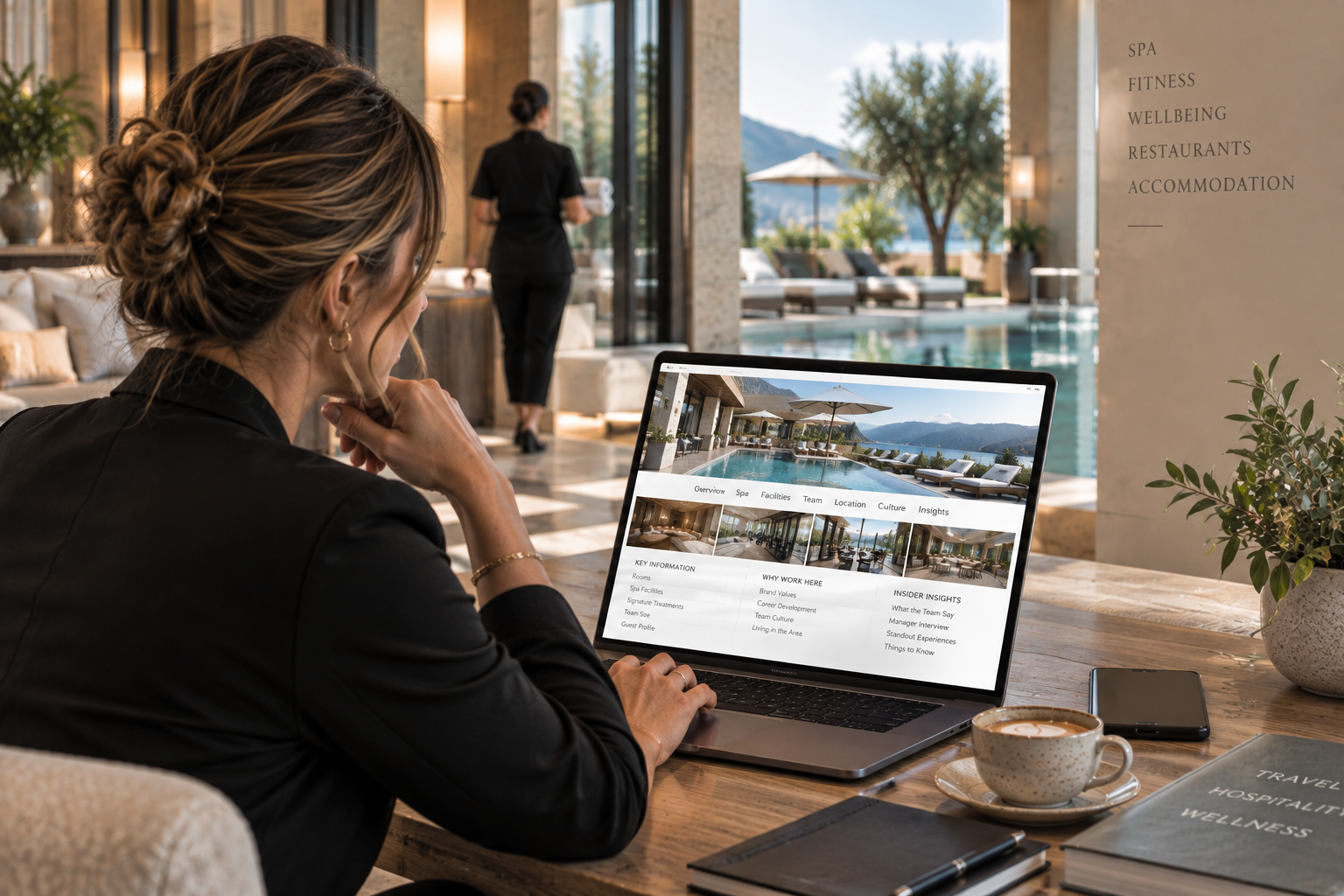
Candidates often decide whether they want a role based largely on the job description. But a title and a list of responsibilities only tell part of the story.
A Spa Manager position in a 12-treatment-room destination spa is very different from the same position in a four-room city hotel. Although the title may be identical, the scale, guest profile, team structure and commercial expectations can vary considerably. Even properties that appear similar may offer entirely different working experiences.
Before deciding whether to apply, take time to understand the business behind the role—not simply the responsibilities attached to it.
Understand the scale
Begin by looking at the size and scope of the operation.
How many treatment rooms does the spa have? Does it also include thermal facilities, a swimming pool, fitness areas, relaxation spaces or food and beverage services? Is it an independent property or part of a larger hotel group?
Scale influences almost every aspect of the role. A larger operation may involve a more complex management structure, greater revenue responsibility and more time devoted to leadership, planning and reporting.
In a smaller spa, the manager may be more involved in daily operations, regularly supporting reception, assisting the team or occasionally delivering treatments.
Neither environment is inherently better. The important question is which one best suits your experience, strengths and expectations.
Identify the business model
Not every spa attracts business in the same way.
A hotel spa may depend heavily on resident guests, packages and seasonal occupancy. A destination spa may be the primary reason guests travel to the property. A city spa might rely on local clients, memberships and repeat visits, while a private members’ club may place greater emphasis on community, relationships and retention.
Look for clues about the spa’s main sources of business, such as:
Hotel residents
Day-spa guests
Local or fitness memberships
Retreats and wellness programmes
Corporate and group bookings
Private or VIP clients
The business model will influence opening hours, staffing levels, pricing, treatment demand and the commercial targets associated with the position.
Review the treatment and product offering
Study the treatment menu and the property’s product partnerships.
Which brands does it use? Is the offering centred on traditional spa therapies, advanced aesthetics, holistic treatments or medical wellness? Are services highly standardised, or does the spa place greater emphasis on personalisation?
This research can help you understand whether your technical experience is relevant and where additional training may be needed. It can also reveal the property’s position within the market.
A broad treatment menu may offer variety but create greater complexity in training, consistency and stock management. A more focused menu may reflect a strong, clearly defined concept—or an offering that is still being developed.
Do not simply consider whether you recognise the brands. Ask yourself whether you believe in their philosophy and would feel confident representing them.
Learn about the guest
The guest profile has a significant influence on the working environment.
International hotel guests may expect speed, flexibility and highly polished luxury service. Members may value familiarity, recognition and continuity. Guests visiting a destination-wellness property may arrive with more complex goals and expect guidance throughout their stay.
Consider what the property promises through its marketing and how that promise is reflected in the spa experience. Ask yourself whether you understand this type of guest and whether the service style suits you.
Luxury is not expressed in the same way everywhere. Some properties are highly formal, while others prioritise warmth, discretion, privacy or a more relaxed sense of belonging.
Explore the team structure
A job title becomes more meaningful once you understand where it sits within the wider team.
Try to establish:
The approximate size of the team
The management and supervisory structure
Whether reception is a dedicated function
Whether therapists are permanent, flexible or agency-based
Who the position reports to
Whether recruitment appears to be ongoing
Whether the property promotes employees internally
You may not find every answer publicly, but any gaps in your research can become useful interview questions.
Repeated vacancies could indicate growth, seasonal recruitment or retention challenges. Avoid making assumptions without context, but note anything you would like the employer to explain.
Consider what people say—carefully
Guest reviews can reveal recurring strengths and weaknesses in the experience. Focus on patterns rather than isolated complaints.
Are therapists regularly praised by name? Do guests frequently mention warmth, cleanliness or attention to detail? Are there repeated concerns about bookings, maintenance or inconsistent service?
Employee-review platforms and professional networks may provide another perspective, but approach them with care. Individual reviews can be emotional, outdated or unrelated to the current leadership team.
Use reviews to identify areas worth discussing—not to reach a final verdict before you have spoken to the employer.
Test the practical reality
A role can appear ideal professionally while being unsuitable in practice.
Check the property’s location, journey time and available transport. Consider whether its opening hours work with public transport and whether early starts or late finishes would be manageable.
If relocation is required, investigate housing costs and the surrounding area instead of relying solely on the property’s destination marketing.
For rural hotels and resorts, find out whether staff accommodation, meals or transport are provided. Understand any associated costs and whether the arrangements would suit your circumstances.
Practical compatibility matters. An exhausting commute or unsustainable living arrangement can quickly outweigh the appeal of an impressive title.
Tailor your application
Your research should influence the way you apply.
A generic application explains why you want to be a Spa Manager. A strong application explains why your experience is relevant to this particular spa.
If the property is membership-led, highlight your experience in retention, relationship-building and recurring revenue. If it is preparing for an opening or refurbishment, emphasise project work, recruitment and change management. If the operation is strongly commercially focused, provide evidence of revenue growth, payroll control or improved productivity.
Show that you understand the property’s context and can connect your experience directly to its needs.
Arrive with better questions
Thorough research also leads to a more valuable interview.
Instead of asking questions the website has already answered, explore the reality behind what you discovered:
“I noticed that the spa serves both hotel guests and local members. How do you balance the needs of those two audiences?”
“The property appears to be expanding its wellness offering. What would the new manager be expected to develop?”
“I saw that the spa works with several product houses. How is training managed across the team?”
Questions like these demonstrate genuine interest while helping you decide whether the reality of the role matches the opportunity being presented.
Make an informed move
A job description explains what an employer wants from a candidate. Property research helps you understand the environment in which those expectations must be delivered.
At Wellness House Collective, we believe good career decisions begin with context. Research the scale, business model, guest profile, team structure and practical realities of the property. Use what you learn to decide whether the opportunity deserves your application—and to demonstrate why your application deserves attention.
The better you understand the property, the more confidently you can decide whether it belongs in the next chapter of your career.
property profilespa jobsrecruitment